

Currently Empty: £0.00


Health
Legal Aspects of Health and Safety: What Every Worker Should Know
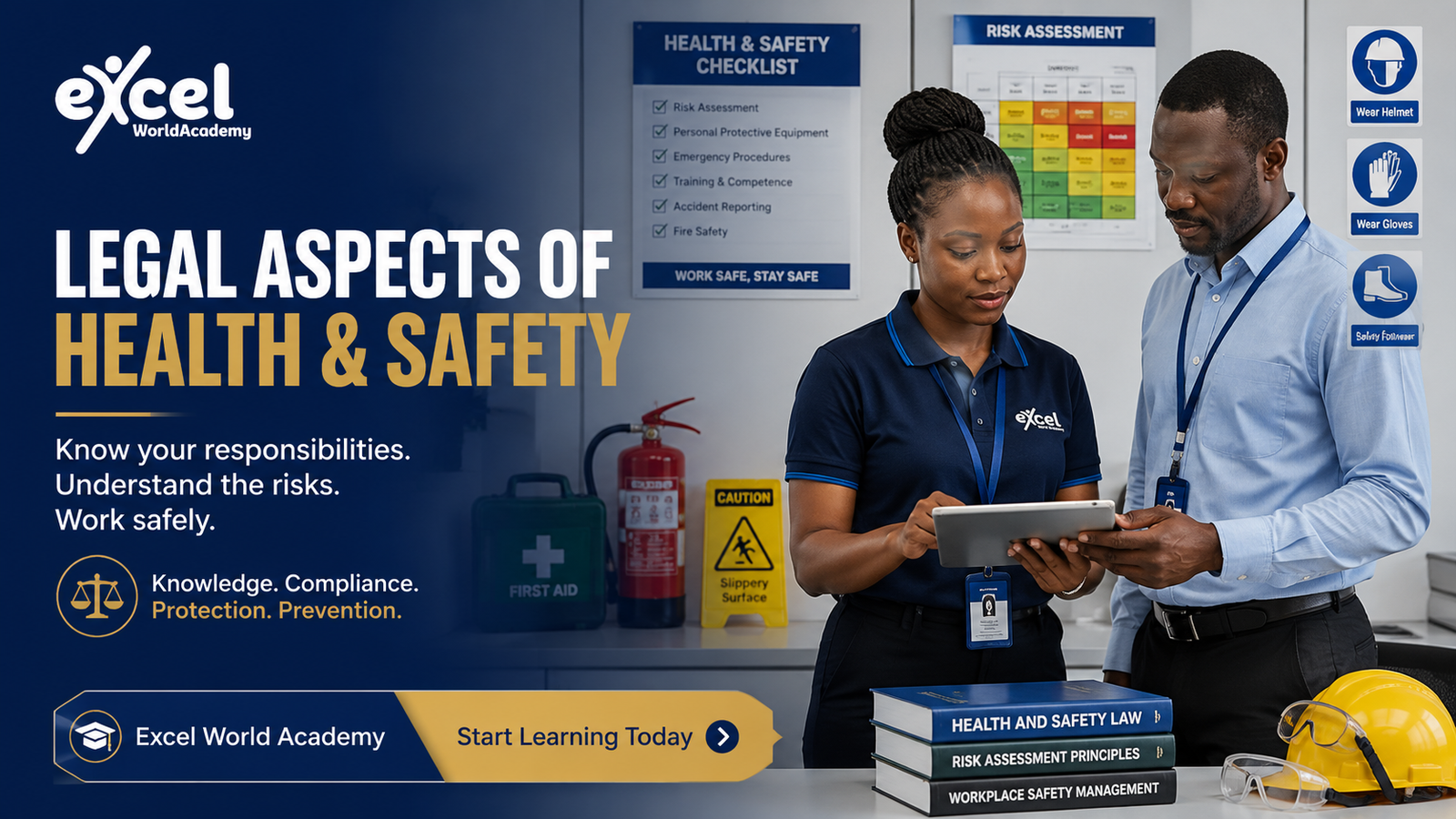
Health and safety are important in every workplace. Whether you work in healthcare, social care, construction, education, retail, hospitality, or an office, everyone has a role to play in keeping the workplace safe.
Understanding the legal aspects of health and safety helps employees and employers know their responsibilities. It also helps reduce accidents, prevent injuries, and create a safer working environment.
Health and safety laws are not simply rules to follow. They are designed to protect people and reduce the risks that can come with everyday work activities.
What Are the Legal Aspects of Health and Safety?
The legal aspects of health and safety cover the laws, rules, and responsibilities that help protect workers and others from workplace risks.
These legal requirements help organisations:
- Identify and manage workplace hazards.
- Prevent accidents and injuries.
- Protect the health and wellbeing of employees.
- Provide safe working conditions.
- Give workers suitable information and training.
- Reduce risks to visitors and members of the public.
Understanding these responsibilities is important for both employers and employees.
Why Is Health and Safety Law Important?
Workplace accidents can have serious effects on individuals, families, and businesses. An accident may result in injury, time away from work, financial loss, or long-term health problems.
Good health and safety practices can help:
- Reduce workplace accidents.
- Protect employees and visitors.
- Improve employee wellbeing.
- Create a positive safety culture.
- Reduce workplace disruption.
- Support legal compliance.
- Improve confidence among workers.
A safe workplace benefits everyone.
Employer Responsibilities for Health and Safety
Employers have an important responsibility to protect the health, safety, and welfare of their employees.
This includes taking reasonable steps to identify and control workplace risks.
Carrying Out Risk Assessments
Employers should identify workplace hazards and assess the risks they create.
This may include risks from:
- Slips and trips
- Manual handling
- Fire
- Electrical equipment
- Hazardous substances
- Workplace equipment
Once risks are identified, suitable control measures should be put in place.
Providing Safe Equipment
Employers should ensure that workplace equipment is suitable, properly maintained, and safe to use.
Employees should also receive suitable instructions and training before using equipment that may present a risk.
Providing Health and Safety Training
Training helps employees understand workplace hazards and how to work safely.
Depending on the workplace, training may cover areas such as:
- Risk awareness
- Fire safety
- Manual handling
- Emergency procedures
- Accident reporting
- Personal protective equipment
- Infection prevention
Providing a Safe Working Environment
Employers should take steps to maintain a workplace that is safe and suitable for employees.
This may include good lighting, suitable ventilation, clean working areas, clear walkways, and appropriate emergency procedures.
Employee Responsibilities for Health and Safety
Health and safety is not only the employer’s responsibility. Employees also have an important role to play.
Workers should:
- Follow workplace health and safety procedures.
- Use equipment correctly.
- Attend required training.
- Use PPE when required.
- Report hazards and unsafe conditions.
- Report accidents and near misses.
- Take reasonable care of their own safety.
- Avoid actions that could put others at risk.
Following workplace safety procedures can help protect both employees and the people around them.
The Importance of Risk Assessments
Risk assessments are a key part of workplace health and safety.
They help organisations identify hazards and decide how risks can be controlled.
A basic risk assessment involves:
- Identifying the hazards.
- Identifying who may be affected.
- Assessing the level of risk.
- Putting control measures in place.
- Reviewing the assessment when needed.
Risk assessments should lead to real action. They should help make workplaces safer rather than simply being treated as paperwork.
Health and Safety in Health and Social Care
Health and safety are especially important in health and social care.
Care workers and healthcare professionals may face risks such as:
- Manual handling injuries
- Slips and falls
- Infection risks
- Exposure to harmful substances
- Sharps injuries
- Workplace stress
- Challenging behaviour
Understanding health and safety responsibilities can help professionals protect themselves while providing safe and effective care.
Training is an important part of helping care workers understand how to identify risks and follow safe working practices.
Why Health and Safety Training Matters
Good training gives employees the knowledge and confidence they need to work safely.
Health and safety training can help workers understand:
- Their responsibilities.
- Common workplace hazards.
- How to reduce risks.
- How to follow safe working practices.
- How to report accidents.
- How to respond to emergencies.
For employers, training can also support a stronger workplace safety culture.
How Excel World Academy Can Help
At Excel World Academy, we believe that knowledge is an important part of creating safer workplaces.
Our Legal Aspects of Health and Safety Course is designed to help learners develop their understanding of health and safety responsibilities and the importance of working safely.
Whether you’re a care worker, healthcare professional, support worker, employee, or someone looking to improve your professional knowledge, developing your understanding of health and safety can support your career and help you contribute to a safer workplace.
With flexible online learning, you can develop your knowledge around your work and personal commitments.
Who Can Benefit from This Course?
The course may be useful for:
- Care workers
- Healthcare professionals
- Support workers
- Employees
- Managers and supervisors
- Individuals starting a new career
- Professionals looking to improve their health and safety knowledge
Learning about the legal aspects of health and safety can help you better understand your responsibilities and the importance of safe working practices.
Frequently Asked Questions
What are the legal aspects of health and safety?
The legal aspects of health and safety include the laws, rules, and responsibilities designed to protect employees and others from workplace risks.
Why is health and safety training important?
Health and safety training helps employees understand workplace risks, follow safety procedures, and know how to respond to hazards and emergencies.
Who is responsible for workplace health and safety?
Both employers and employees have responsibilities. Employers should provide a safe working environment and suitable training, while employees should follow safety procedures and report hazards.
Can health and safety training help my career?
Yes. Health and safety knowledge can be useful across many industries and can demonstrate your commitment to professional development and safe working practices.
Final Thoughts
Understanding the legal aspects of health and safety is important for anyone who works or manages a workplace. Knowing your responsibilities can help reduce risks, prevent accidents, and create a safer environment for everyone.
Whether you’re starting a new career or looking to improve your professional knowledge, the right training can help you become more confident in understanding workplace health and safety.
Ready to Improve Your Health and Safety Knowledge?
At Excel World Academy, we have a course designed to help you build your knowledge of the Legal Aspects of Health and Safety.
🎓 Take the next step in your professional development and start learning today.
👉 Explore the course: https://excelworldacademy.com/courses/legal-aspects-of-health-and-safety/
Learn today. Build your knowledge. Work safer with Excel World Academy.