

Currently Empty: £0.00


Learning
Equality and Diversity in the Workplace: Why It Matters
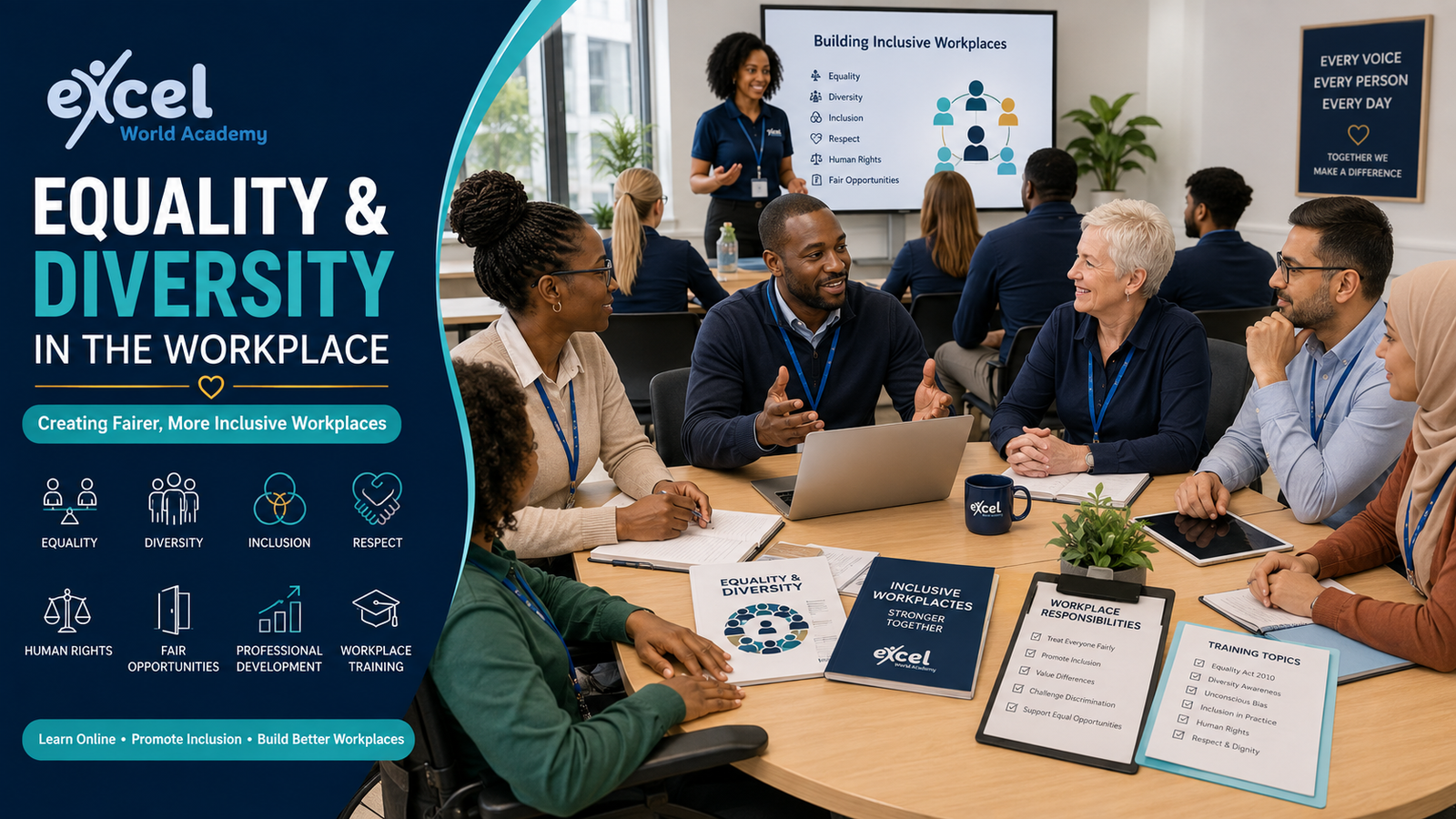
Every workplace should be a place where people are treated fairly, respected, and given the opportunity to contribute.
However, creating a fair and inclusive workplace requires more than having policies in place. Employees need to understand what equality and diversity mean, recognise unfair treatment, and understand their responsibilities when working with others.
This is particularly important in health and social care, where professionals work with people from different backgrounds, cultures, abilities, and life experiences.
Understanding equality and diversity can help employees promote respect, prevent discrimination, and contribute to a positive workplace culture.
What Do Equality and Diversity Mean?
Although the terms are often used together, equality and diversity have different meanings.
Equality is about ensuring people are treated fairly and have equal opportunities.
Diversity recognises and values the differences between people.
These differences can include areas such as:
- Background
- Culture
- Age
- Disability
- Gender
- Beliefs
- Experiences
- Personal circumstances
A diverse workplace can bring different perspectives and experiences together, while equality helps ensure people are treated fairly.
Why Is Equality and Diversity Important?
A workplace where people feel respected and included can support better relationships, teamwork, and employee wellbeing.
Promoting equality and diversity can help organisations:
- Create a respectful working environment.
- Reduce discrimination.
- Support inclusion.
- Improve teamwork.
- Build trust between employees.
- Respect individual differences.
- Meet legal responsibilities.
- Promote a positive workplace culture.
For health and social care organisations, these principles are particularly important because employees provide support to people with different needs and backgrounds.
Understanding Discrimination
Discrimination occurs when someone is treated unfairly because of a particular characteristic or circumstance.
It can have serious effects on individuals and organisations.
Discrimination may affect:
- A person’s confidence.
- Their wellbeing.
- Their ability to participate.
- Workplace relationships.
- Team morale.
- Organisational culture.
Employees should understand how inequality and discrimination can affect people and know the importance of treating others fairly and respectfully.
Recognising potential discrimination is an important part of creating a more inclusive workplace.
Human Rights in the Workplace
Human rights are an important part of creating fair and respectful working environments.
Employees should understand that people have rights and should be treated with dignity and respect.
In health and social care, respecting human rights is particularly important because professionals often support people who may be vulnerable or dependent on others.
Respecting people’s rights can help promote:
- Dignity.
- Choice.
- Fair treatment.
- Respect.
- Inclusion.
A workplace culture that values human rights helps create an environment where people feel respected.
Understanding the Equality Act
The Equality Act is an important part of the UK’s legal framework for equality and protection from discrimination.
Understanding the principles of the Equality Act can help employees recognise their responsibilities and understand why fair treatment matters in the workplace.
For organisations, awareness of equality legislation can support compliance and help create fairer working environments.
Training can help employees develop a clearer understanding of these responsibilities and how they relate to everyday workplace situations.
Inclusive and Exclusive Models of Society
Understanding how inclusion and exclusion affect people is another important part of equality and diversity awareness.
An inclusive environment aims to ensure people can participate, contribute, and feel respected. An exclusive environment can create barriers that prevent people from fully participating.
Workplaces can promote inclusion by:
- Listening to employees.
- Respecting differences.
- Challenging unfair treatment.
- Providing equal opportunities.
- Encouraging respectful communication.
- Creating an environment where people feel valued.
Small changes in everyday workplace behaviour can contribute to a more inclusive culture.
How Can Employers Promote Inclusion?
Creating an inclusive workplace is a shared responsibility, but organisations have an important role to play.
Employers can promote inclusion by:
Providing Appropriate Training
Employees need to understand equality, diversity, discrimination, and their responsibilities.
Encouraging Respectful Communication
Staff should be encouraged to communicate with colleagues respectfully and professionally.
Challenging Discrimination
Organisations should take concerns about discrimination seriously and respond appropriately.
Creating Fair Opportunities
Employees should have fair opportunities to learn, develop, and contribute.
Supporting Different Needs
Organisations should consider the needs and circumstances of their employees and service users.
Equality and Diversity in Health and Social Care
Equality and diversity are particularly important in health and social care.
Care professionals work with people who may have different cultures, beliefs, communication needs, abilities, and personal preferences.
Providing person-centred care means understanding and respecting these differences.
A care worker should avoid making assumptions about a person and should take the time to understand their individual needs and preferences.
This can contribute to more respectful and inclusive care.
Who Should Complete Equality and Diversity Training?
Equality and diversity training is relevant to employees across different industries and levels.
Excel World Academy’s course is suitable for:
- Employees at all levels.
- New starters.
- Health and social care workers.
- Staff completing induction training.
- Employees needing refresher training.
- Organisations looking to promote fair and inclusive workplaces.
The course can help learners build awareness and understanding of equality and diversity principles.
Learn Equality and Diversity Online With Excel World Academy
Excel World Academy’s Equality and Diversity Online Training Course is designed to help learners understand the value of equality, promote inclusion, and recognise the importance of preventing discrimination in everyday working environments.
The course covers:
- What equality and diversity mean.
- The consequences of inequality and discrimination.
- Human rights in the workplace.
- Understanding the Equality Act.
- Inclusive and exclusive models of society.
- Promoting inclusion and respect.
- Creating fairer and more inclusive workplaces.
The training is 100% online and self-paced, with access from a desktop, tablet, or mobile device. It takes approximately 20–40 minutes, includes multiple-choice questions, and provides a certificate on completion.
The course is based on UK legislation and is also suitable for international organisations working with UK/EU standards.
Frequently Asked Questions
What is equality and diversity training?
Equality and diversity training helps employees understand fair treatment, inclusion, discrimination, human rights, and their responsibilities in the workplace.
Why is equality important at work?
Equality helps ensure people are treated fairly and have equal opportunities regardless of their differences or circumstances.
What is diversity in the workplace?
Workplace diversity refers to the differences between people, including their backgrounds, experiences, cultures, abilities, and perspectives.
Who needs equality and diversity training?
Employees at all levels can benefit from equality and diversity training, particularly new starters, health and social care workers, and organisations looking to strengthen workplace inclusion.
Final Thoughts
Equality and diversity are important parts of a respectful and professional workplace.
When employees understand the importance of fairness, inclusion, human rights, and respect, they are better prepared to contribute to a positive working environment.
Creating an inclusive workplace is not the responsibility of one person. It requires everyone to understand their role and contribute to a culture where people are treated fairly and with respect.
Ready to Build a More Inclusive Workplace?
Develop your knowledge with Excel World Academy’s Equality and Diversity Online Training Course.
💻 100% online
⏱️ 20–40 minutes
📱 Desktop, tablet and mobile compatible
🏆 Certificate on completion
👉 Enrol today:
https://excelworldacademy.com/courses/equality-and-diversity-online-training-course/
Learn about equality. Promote inclusion. Build a more respectful workplace with Excel World Academy.