

Currently Empty: £0.00


Health
Effective Writing in the Workplace: Skills Every Professional Needs
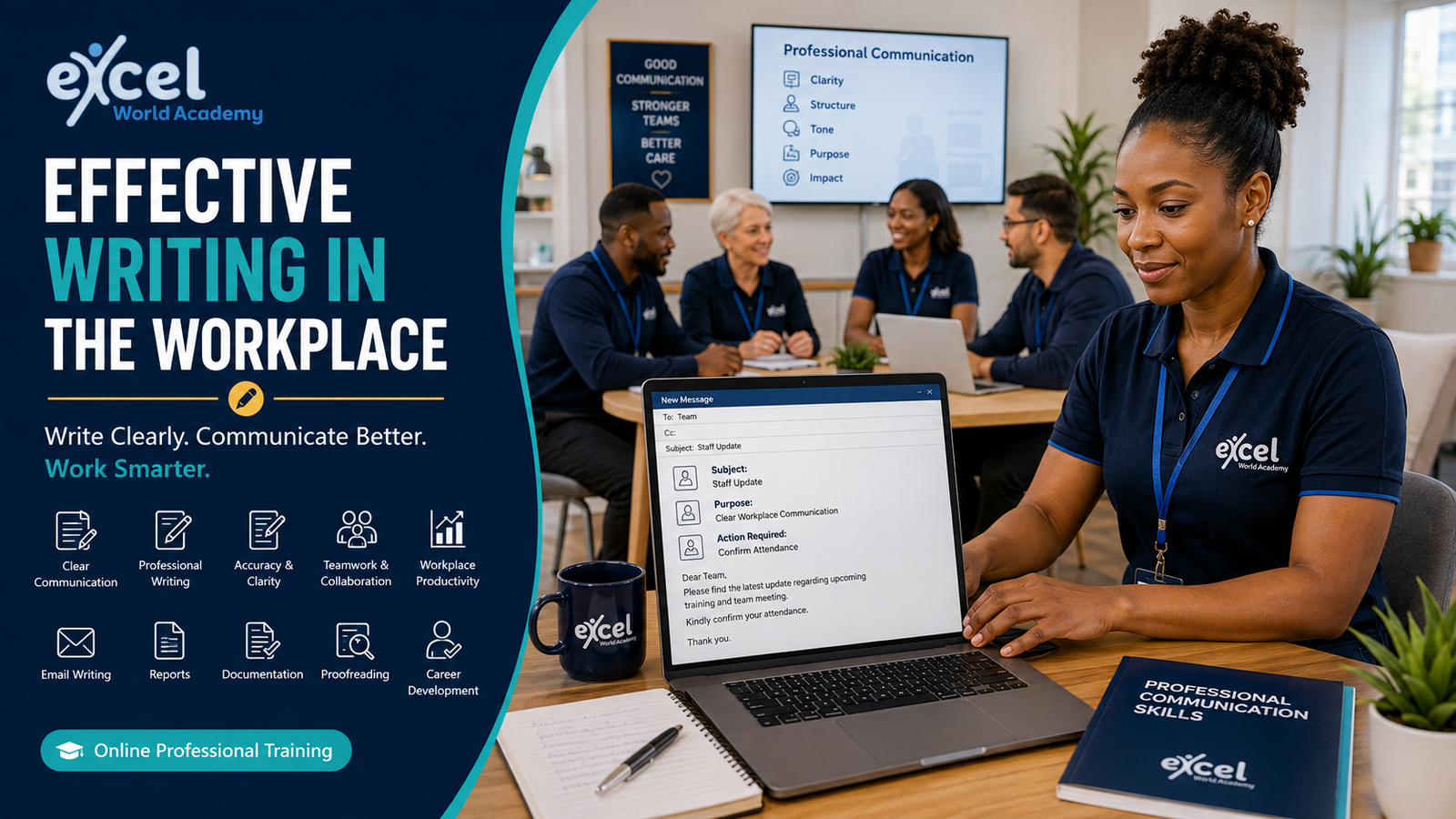
Writing is part of almost every professional role. From emails and reports to care notes, workplace updates and instructions, employees need to communicate information clearly and accurately.
In health and social care, effective writing is especially important. A poorly written message or unclear record can lead to confusion and make it harder for colleagues to understand important information.
Developing effective writing skills in the workplace can therefore improve communication, professionalism and teamwork.
What Is Effective Writing in the Workplace?
Effective workplace writing is the ability to communicate information in a way that is clear, accurate, professional and easy to understand.
Good workplace writing should have a clear purpose. The writer should understand what they want the reader to know or do and choose language that suits the audience.
Workplace writing can include:
- Emails
- Reports
- Care records
- Workplace updates
- Letters
- Instructions
- Meeting notes
- Policies and procedures
- Internal messages
The type of writing may change, but the goal remains the same: communicate the right information clearly.
Why Is Workplace Writing Important?
Employees communicate with different people every day. A message may be read by a colleague, manager, service user, family member or another professional.
Clear writing helps reduce misunderstandings and makes information easier to use.
Effective writing can help professionals:
- Communicate information clearly.
- Reduce misunderstandings.
- Save time.
- Present information professionally.
- Support teamwork.
- Create accurate records.
- Build confidence.
- Improve workplace communication.
Writing is also a reflection of professionalism. Well-structured and carefully checked communication can help create confidence in the person sending it.
Know Your Audience
One of the first things to consider before writing is who will read the message.
The language used in an email to a manager may be different from the language used in a message intended for a service user.
Before writing, consider:
Who is reading this?
What do they need to know?
What do I want them to understand or do?
Thinking about the reader can help make the message more relevant and easier to understand.
Keep Your Writing Clear and Simple
Professional writing does not need to use complicated words.
In many situations, simple and direct language is more effective.
Instead of adding unnecessary words, focus on the information the reader actually needs.
For example:
Less clear:
“With regard to the matter that was previously discussed, it is important to note that the meeting will take place at the previously agreed time.”
Clearer:
“As agreed, the meeting will take place at the scheduled time.”
Clear writing makes information easier to understand and reduces the chance of confusion.
Use the Right Tone
The tone of workplace writing matters.
Professional communication should generally be respectful and appropriate to the situation.
The tone may need to change depending on whether you are:
- Making a formal request.
- Giving an update.
- Responding to a concern.
- Writing to a colleague.
- Communicating with a client or service user.
Avoid writing messages when angry or frustrated. Taking a moment to review your words before sending them can prevent unnecessary misunderstandings.
Structure Your Writing Properly
Good structure makes workplace communication easier to read.
For longer documents, use:
- Headings
- Short paragraphs
- Bullet points
- Clear sections
- Appropriate spacing
For emails, make the purpose clear early in the message.
If action is required, clearly explain what needs to happen and, where relevant, when it needs to happen.
Proofread Before Sending
One of the simplest ways to improve workplace writing is to check it before sending or submitting it.
Look for:
- Spelling mistakes.
- Grammar errors.
- Missing information.
- Incorrect dates or names.
- Unclear sentences.
- Formatting problems.
A quick review can prevent mistakes from reaching the reader.
This is particularly important when writing professional records or communicating information that others will rely on.
Effective Writing in Health and Social Care
Writing plays an important role in health and social care.
Care professionals may need to record information about visits, communicate with colleagues, provide updates and document important events.
Written information should be:
- Accurate.
- Clear.
- Relevant.
- Professional.
- Appropriate for the intended reader.
Good written communication supports continuity and helps colleagues understand important information about the people receiving care.
Confidential information should also be handled according to relevant workplace policies and procedures.
Common Workplace Writing Mistakes
Some common mistakes can make professional writing less effective.
Writing Too Much
Long messages can make it difficult for readers to find the key information.
Using Too Much Jargon
Technical terms may not be understood by everyone.
Not Checking Your Work
Spelling and grammar mistakes can affect clarity and professionalism.
Unclear Purpose
If the reader cannot understand why the message was sent, they may not know what action is expected.
Poor Structure
Large blocks of text can make information difficult to follow.
Avoiding these mistakes can make workplace communication more effective.
How Can Professionals Improve Their Writing Skills?
Writing improves with practice.
Professionals can develop their skills by:
- Reading professional documents and emails.
- Practising clear and concise writing.
- Thinking about their audience.
- Reviewing messages before sending them.
- Asking for constructive feedback.
- Learning how to structure different types of workplace documents.
- Improving grammar, spelling and punctuation.
- Using plain and professional language.
Training can also provide a structured way to develop these skills.
Develop Your Writing Skills With Excel World Academy
Excel World Academy provides online learning designed to help healthcare and care professionals develop practical workplace skills. The academy describes its learning platform as healthcare-focused, with online remote learning and access to professional training.
The Effective Writing in the Workplace Online Training course is designed for professionals who want to improve their written communication and become more confident when writing in a professional environment.
Whether you are writing an email, report, workplace update or professional record, better writing can help you communicate your message more effectively.
The course can be a useful addition to your professional development, particularly if your role involves regular written communication.
Ready to Improve Your Workplace Writing?
Build your professional communication skills with Excel World Academy’s Effective Writing in the Workplace Online Training.
👉 Start your course:
Effective Writing in the Workplace Online Training
Write clearly. Communicate professionally. Build your confidence.
Frequently Asked Questions
Why is effective writing important in the workplace?
It helps professionals communicate information clearly, reduce misunderstandings and maintain professional communication.
What are examples of workplace writing?
Examples include emails, reports, care records, workplace updates, letters, instructions and meeting notes.
How can I improve my professional writing?
Practise writing clearly, understand your audience, use an appropriate tone, structure your information properly and proofread before sending.
Is effective writing important in health and social care?
Yes. Clear written communication can help care professionals record and share important information effectively and support good teamwork.